New Year Sale 70% Discount Offer - Ends in 0d 00h 00m 00s - Coupon code: 70track

Free Cisco 350-501 Practice Exam with Questions & Answers

Questions 1

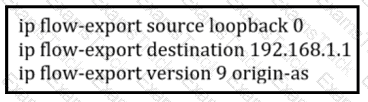
Refer to the exhibit:

350-501 Question 1

Export statistics received do not include the BGP next hop.

Which statement about the NetFlow export statistics is true?

Options:
A.

Only the origin AS of the source router will be included in the export statistics.

B.

Loopback 0 must be participating in BGP for it to be included in the export statistics.

C.

The origin AS and the peer-as will be included in the export statistics.

D.

To include the BGP next hop in the export statistics, those keywords must be included with the version 9 entry.

Cisco 350-501 Premium Access
Questions 2

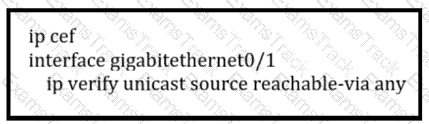
Refer to the exhibit:

350-501 Question 2

Router 1 was experiencing a DDoS attack that was traced to interface gjgabitethernet0/1.

Which statement about this configuration is true?
Options:
A.

Router 1 drops all traffic that ingresses interface gigabitethernet0/1 that has a FIB entry that exits a different interface

B.

Router 1 accepts source addresses on interface gigabitethemet0/1 that are private addresses

C.

Router 1 accepts all traffic that ingresses and egresses interface gigabitethernet0/1

D.

Router 1 accepts source addresses that have a match in the FIB that indicates it is reachable through a real interface

Questions 3

350-501 Question 3

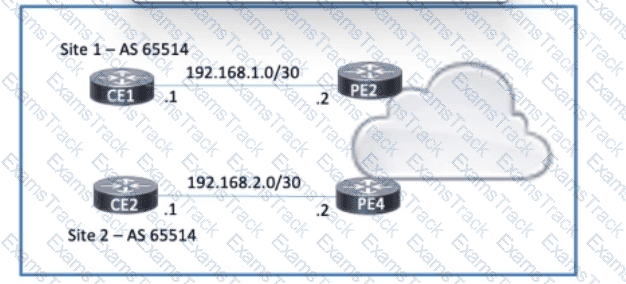
Refer to the exhibit. Company A has two offices that communicate via a service provider in AS 65516. CE1 and CE2 provide connections to the service provider from site 1 and site 2 respectively. Both customer sites use BGP as the PE-CE routing protocol. Which configuration must the engineer apply to ensure that traffic passes between the two sites?

Options:
A.

CE2(config)#router bgp 65514

CE2(config-router)#neighbor 192.168.1.1 as-override

B.

CE1(config)#router bgp 65514

CE1(config-router)#neighbor 192.168.1.2 allowas-in

C.

PE2(config)#router bgp 65516

PE2(config-router)#neighbor 192.168.1.1 next-hop-self

PE4(config)#router bgp 65516

PE4(config-router)#neighbor 192.168.2.1 next-hop-self

D.

CE1(config)#router bgp 65514

CE1(config-router)#neighbor 192.168.1.2 next-hop-self

CE2(config)#router bgp 65514

CE2(config-router)#neighbor 192.168.2.2 next-hop-self

Questions 4

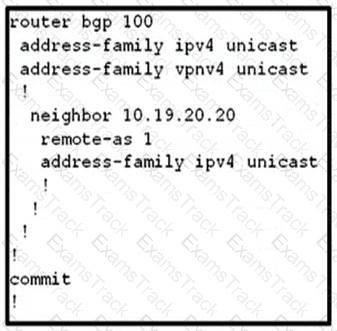
Refer to the exhibit.

350-501 Question 4

An engineer is trying to implement BGP configuration on a router Which configuration error prevents the ASBR from establishing a BGP neighborship to a directly connected BGP speaker?
Options:
A.

The routing policy is absent for this Cisco IOS XR eBGP instance.

B.

The IPv4 address family configuration under neighbor configuration-mode must be removed.

C.

The VPNv4 address family interferes with the 8GP IPv4 address family negotiations.

D.

The TCP session parameters are not specified.

Questions 5

350-501 Question 5

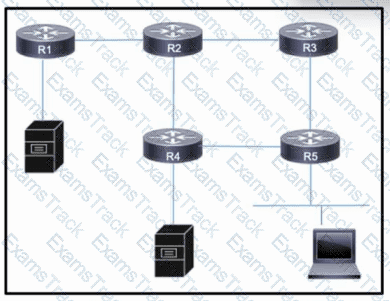
Refer to the exhibit. Users on a LAN connected to router R5 frequently open high-traffic connections with servers connected to R1 and R4. Users on R2 also require access to the servers, but performance is not a major concern and their traffic can be treated as secondary. As traffic on all links grows, the network architect wants to mitigate the potential for congestion on the link between R2 and R4.

Which action must the engineering team take to improve performance on the R2-R4 link for users on R5 while still allowing other traffic to flow?

Options:
A.

Implement traffic policing on R2 to drop unnecessary traffic from secondary users when that traffic exceeds a given threshold.

B.

Implement traffic shaping on R2 to control transmission between R1 and R4 for traffic identified in a class map.

C.

Implement LLQ for the whole network with a strict policy to ensure that all traffic from the servers is sent to priority users without interruption.

D.

Implement FIFO on R1, R2, and R4 to queue traffic so that all traffic can pass with maximum efficiency.

Questions 6

350-501 Question 6

Refer to the exhibit. The operations team is implementing an LDP-based configuration in the service provider core network with these requirements:

R1 must establish LDP peering with the loopback IP address as its Router-ID.

Session protection must be enabled on R2.

How must the team update the network configuration to successfully enable LDP peering between R1 and R2?

Options:
A.

Change the LDP password on R2 to Cisco.

B.

Configure mpls ldp router-id loopback0 on R1 and R2.

C.

Configure LDP session protection on R1.

D.

Change the discover hello hold time and interval to their default values.

Questions 7

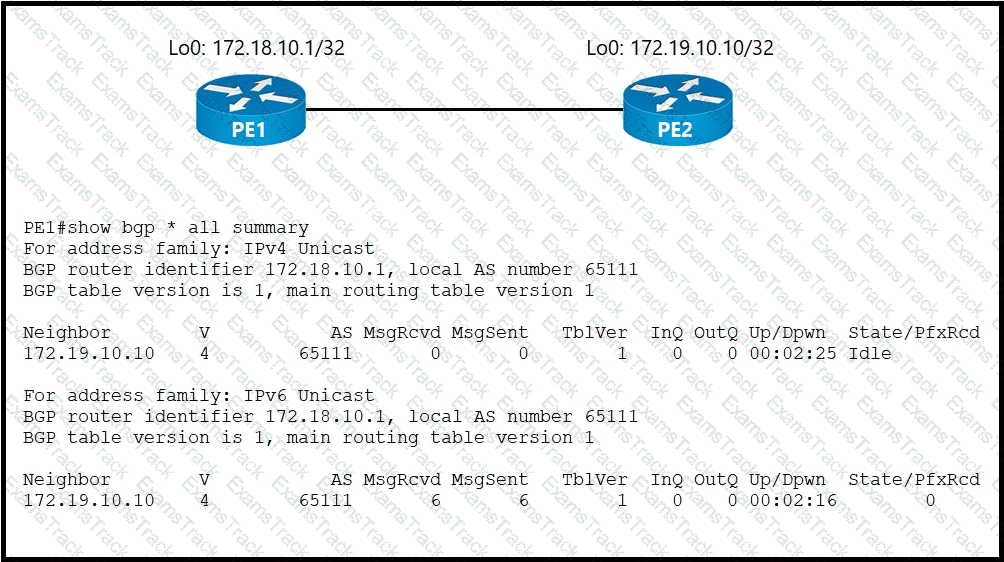
Refer to the exhibit.

350-501 Question 7

An administrator working for large ISP must connect its two POP sites to provide internet connectivity to its customers. Which configuration must the administrator perform to establish an iBGP session between routers PE1 on POP site 1 and PE2 on POP site 2?
Options:
A.

PE2#configure terminal

PE2(config)#router bgp 65111

PE2(config-router)#no neighbor 172.18.10.1 shutdown

PE2(config-router)#end

B.

PE1#configure terminal

PE1(config)#router bgp 65111

PE1(config-router)#no neighbor 172.19.10.10 shutdown

PE1(config-router)#end

C.

PE1#configure terminal

PE1(config)#router bgp 65111

PE1(config-router)#address-family ipv4 unicast

PE1(config-router-af)#neighbor 172.19.10.10 activate

PE1(config-router-af)#end

D.

PE2#configure terminal

PE2(config)#router bgp 65111

PE2(config-router)#address-family ipv4 unicast

PE2(config-router-af)#neighbor 172.18.10.1 activate

PE2(config-router-af)#end

Questions 8

350-501 Question 8

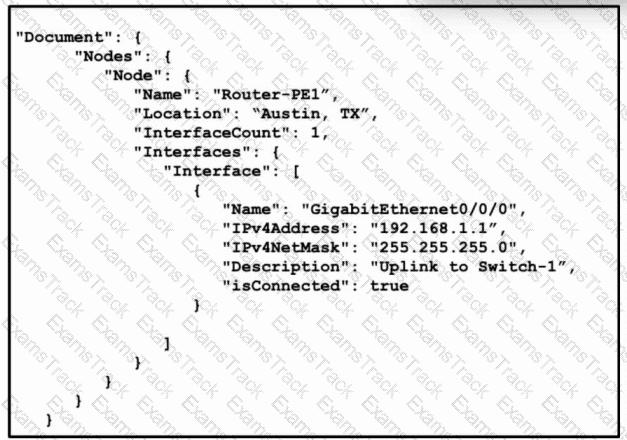
Refer to the exhibit. PE1 is a router connected to a major ISP that provides connectivity for multiple enterprises in several different geographic locations. The ISP networking team uses REST APIs to configure the network devices. A senior engineer retrieved the given script from the library and provided it to a junior engineer to deploy. What effect does the script produce when deployed?

Options:
A.

It configures an interface on PE1.

B.

It configures an interface on Switch 1.

C.

It limits PE1 to exactly one configured interface.

D.

It sets the router name, location, and interface on PE1 and Switch-1.

Questions 9

An engineer needs to implement QOS mechanism on customer's network as some applications going over the internet are slower than others are. Which two actions must the engineer perform when implementing traffic shaping on the network in order to accomplish this task? (Choose two)

Options:
A.

Configure a queue with sufficient memory to buffer excess packets.

B.

Configure the token values in bytes.

C.

Implement packet remarking for excess traffic.

D.

Implement a scheduling function to handle delayed packets.

E.

Configure a threshold over which excess packets are discarded.

Questions 10

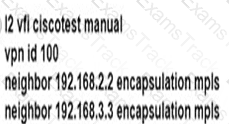
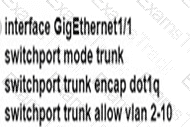
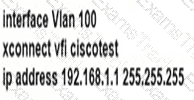
A network engineer is deploying VPLS configuration between multiple PE routers so that customer's remote offices have end-to-end LAN connectivity. Which additional configuration should the engineer perform on the PE routers to enable the virtual switch instance?

A)

350-501 Question 10

B)

350-501 Question 10

C)

350-501 Question 10

D)

350-501 Question 10

Options:
A.

Option A

B.

Option B

C.

Option C

D.

Option D

Questions 11

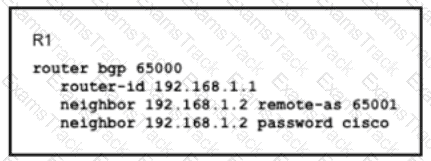
Refer to the exhibit:

350-501 Question 11

Router R1 and its peer R2 reside on the same subnet in the network, If does it make connections to R27

Options:
A.

R1 establishes UDP connections that are authenticated with an MD5 password

B.

R1 establishes TCP connections that are authenticated with a clear-text password

C.

R1 establishes UDP connections that are authenticated with a clear-text password

D.

R1 establishes TCP connections that are authenticated with an MD5 password

Questions 12

Which component is similar to an EVPN instance?
Options:
A.

MPLS label

B.

IGP router ID

C.

VRF

D.

router distinguisher

Questions 13

350-501 Question 13

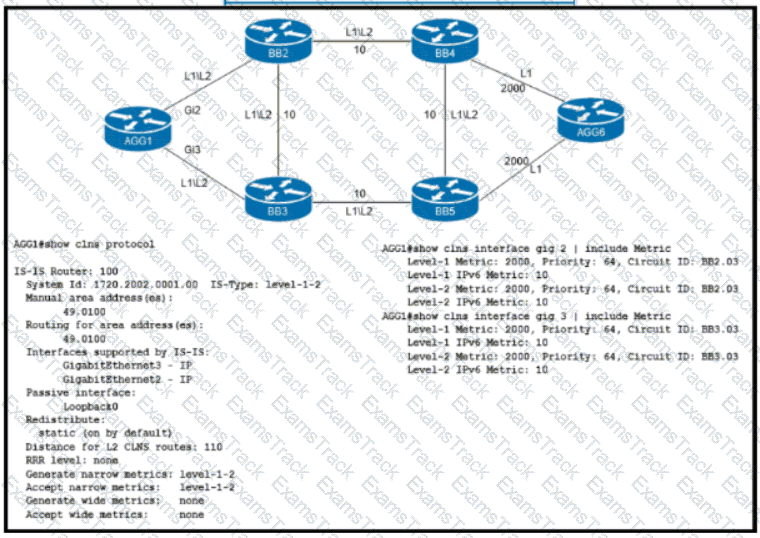
Refer to the exhibit. An engineer is configuring IS-IS on ISP network. Which IS-IS configuration must an engineer implement on router AGG1 so that it establishes connectivity to router AGG6 via the BB3 core router?
Options:
A.

router isis 100

metric-style narrow

interface GigabitEthernet 3

isis metric 10 level-2

B.

router isis 100

metric-style wide

interface GigabitEthernet 3

isis metric 1500 level-2

C.

router isis 100

metric-style narrow

interface GigabitEthernet 3

isis metric 10 level-1

D.

router isis 100

metric-style wide

interface GigabitEthernet 3

isis metric 1500 level-1

Questions 14

350-501 Question 14

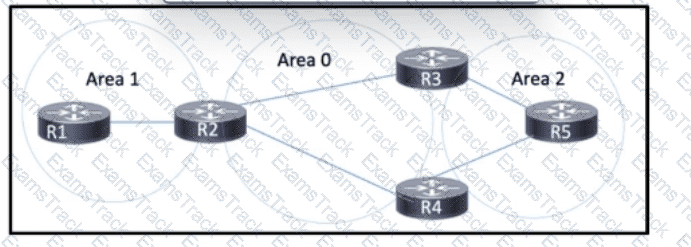
Refer to the exhibit. OSPF is running in the network, which is segmented into three areas. MPLS is enabled on all routers to support Layer 3 VPN. The network architect is concerned about potential packet loss when new OSPF adjacencies form. Which two tasks should the architect perform to implement MPLS LDP synchronization? (Choose two.)

Options:
A.

Enable MPLS functionality on all interfaces that are involved in MPLS.

B.

Configure OSPF to use the same router ID for each router that is involved in MPLS.

C.

Enable LDP sync under the OSPF process.

D.

Establish MPLS targeted sessions for connected LDP neighbors only.

E.

Establish a virtual link between the areas to support LDP sync between segments.

Questions 15

While implementing TTL security, an engineer issues the PE(config-router-af)#neighbor 2.2.2.2 ttl-security hops 2 command. After issuing this command, which BGP packets does the PE accept?

Options:
A.

from 2.2.2.2, with a TTL of less than 2

B.

to 2.2.2.2, with a TTL of less than 253

C.

from 2.2.2.2, with a TTL of 253 or more

D.

to 2.2.2.2, with a TTL of 2 or more

Exam Code: 350-501
Certification Provider: Cisco
Exam Name: Implementing and Operating Cisco Service Provider Network Core Technologies (350-501 SPCOR)
Last Update: Dec 14, 2025
Questions: 547