examstrack logo

Refer to the exhibit.
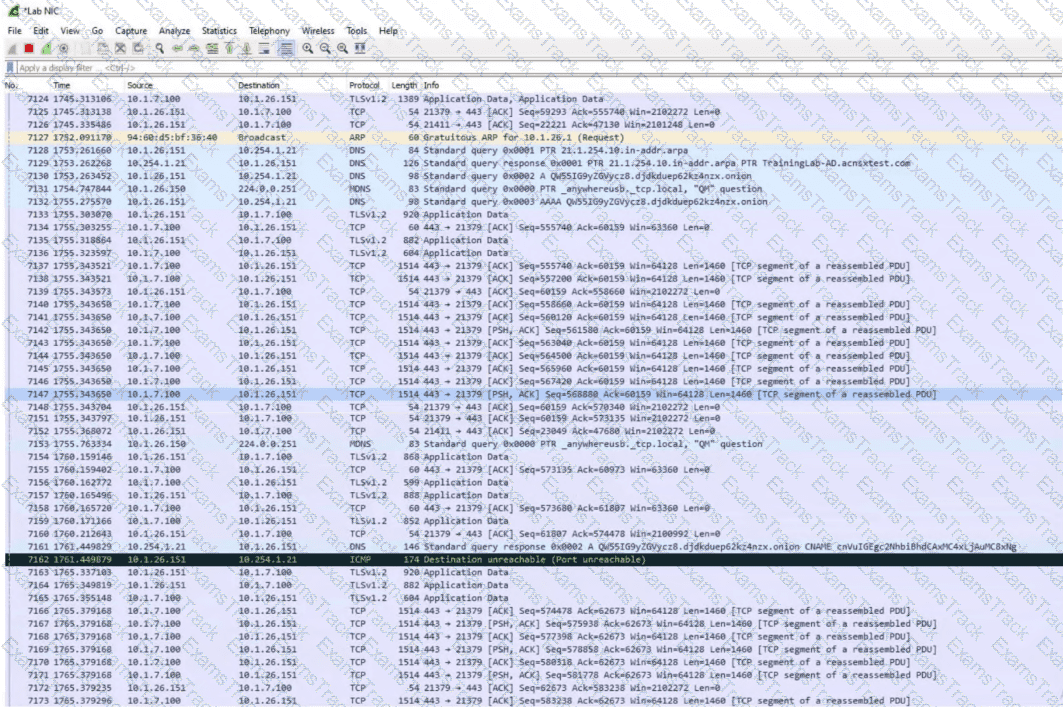
Frame 7128: 10.1.26.151 - > 10.254.1.21 DNS Standard query 0x0001 PTR 21.1.254.10.in-addr.arpa
Frame 7130: 10.1.26.151 - > 10.254.1.21 DNS Standard query 0x0002 A Qw5SIG9yZGvycz8.djdkduep62kz4nzx.onion
Frame 7147: 10.1.26.151 - > 10.1.7.100 TCP 443 - > 21379 [PSH, ACK]
Frame 7162: 10.1.26.151 - > 10.254.1.21 ICMP Destination unreachable (Port unreachable)
Which IP address should be recorded as a potentially compromised client?
A customer’s administrators have added RF Protect licenses and enabled WIDS for an AOS-8-based solution. The customer wants to use the APs’ built-in capabilities without deploying dedicated air monitors (AMs). Administrators tested rogue-AP detection by connecting an unauthorized wireless AP to a switch, but the rogue AP was still not detected after several hours.
What is one point you should ask about?
A customer uses an AOS-10 architecture managed by HPE Aruba Networking Central. HPE Aruba Networking infrastructure devices authenticate clients against an HPE Aruba Networking ClearPass cluster.
In HPE Aruba Networking Central, you examine network traffic flows for a wireless IoT device categorized as a "Raspberry Pi" client. You observe SSH traffic. After checking several additional wireless IoT clients, you find that they are also sending SSH traffic.
Refer to the scenario.
You need an easy way to communicate to HPE Aruba Networking ClearPass Policy Manager (CPPM) that an IoT client has used SSH.
What step should you take?
Refer to the exhibit.
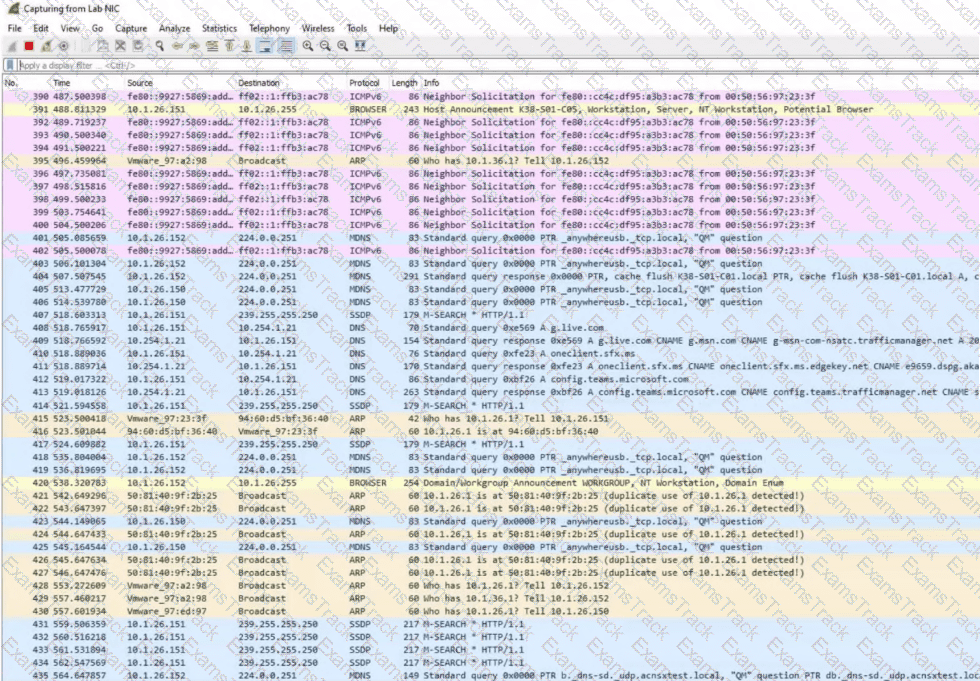
Frame 421: 50:81:40:9f:2b:25 - > Broadcast ARP 60 10.1.26.1 is at 50:81:40:9f:2b:25 (duplicate use of 10.1.26.1 detected!)
Frame 422: 50:81:40:9f:2b:25 - > Broadcast ARP 60 10.1.26.1 is at 50:81:40:9f:2b:25 (duplicate use of 10.1.26.1 detected!)
Frame 424: 50:81:40:9f:2b:25 - > Broadcast ARP 60 10.1.26.1 is at 50:81:40:9f:2b:25 (duplicate use of 10.1.26.1 detected!)
Which device should be documented as potentially malicious and requiring further investigation?
You are assisting a company with adding HPE Aruba Networking ClearPass to its network, which uses HPE Aruba Networking network infrastructure devices.
The company already has a Windows domain and Windows CA. The Windows CA issues certificates to domain computers, domain users, and servers such as domain controllers.
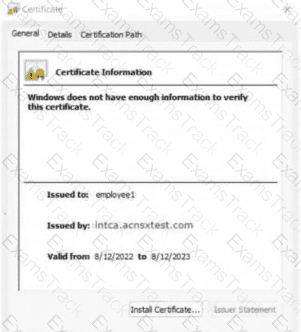
Refer to the scenario. On CPPM, you are creating the authentication source. You have configured the settings displayed on the tab and have not changed any other settings.
Authentication Sources - UniversityAD
Hostname: ad.acnsxtest.com
Connection Security: AD over SSL
Port: 636
Verify Server Certificate: [X] Enable
Bind DN: bind@acnsxtest.com
NetBIOS Domain Name: ACNSXTEST
Base DN: dc=acnsxtest,dc=com
Search Scope: SubTree Search
User Certificate: userCertificate
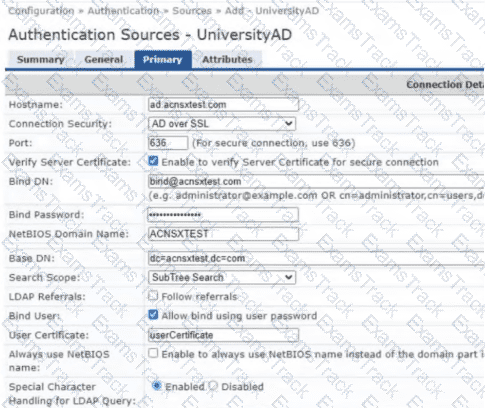
What else must you do to help authentication proceed correctly?
You are entering the following command on an AOS-CX switch:
radius-server host clearpass.example.com tls clearpass-username clearpass-password plaintext
Which credentials should you enter for clearpass-username and clearpass-password?
Your company uses an HPE Aruba Networking AOS-10 architecture managed by HPE Aruba Networking Central. A ClearPass Policy Manager (CPPM) cluster supplies authentication. The company also has a Palo Alto firewall. You want to configure the HPE Aruba Networking infrastructure to quarantine clients for which the firewall sends Syslog Threat messages to CPPM.
Network infrastructure devices already have a “quarantine” role configured.
You checked the CPPM event dictionary and found an entry for Palo Alto Syslog Threats that includes:
Prefix: PANW-Threat
Attributes such as syslogtimestamp and logtype
What is a correct component of the configuration in ClearPass server settings?
A customer requires you to configure Aruba ClearPass Policy Manager (CPPM) to authenticate domain users on domain computers. Domain users, domain computers, and domain controllers obtain certificates from a Windows CA. CPPM must validate these certificates and confirm that the users and computers have accounts in Windows AD. The customer requires encrypted communication for all traffic between CPPM and the domain controllers.
You have imported the Windows CA root certificate into the ClearPass CA Trust list.
Based on these requirements, which usages should be added to it?
Refer to the exhibit.
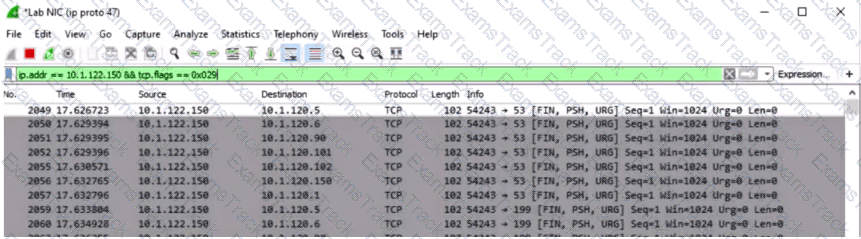
Packet trace display:
Source: 10.1.122.150 - > Destination: 10.1.120.5 TCP 54243 - > 53 [FIN, PSH, URG] Seq=1 Win=1024 Urg=0 Len=0
Source: 10.1.122.150 - > Destination: 10.1.120.6 TCP 54243 - > 53 [FIN, PSH, URG] Seq=1 Win=1024 Urg=0 Len=0
Source: 10.1.122.150 - > Destination: 10.1.120.90 TCP 54243 - > 53 [FIN, PSH, URG] Seq=1 Win=1024 Urg=0 Len=0
Source: 10.1.122.150 - > Destination: 10.1.120.101 TCP 54243 - > 53 [FIN, PSH, URG] Seq=1 Win= 1024 Urg=0 Len=0
Source: 10.1.122.150 - > Destination: 10.1.120.5 TCP 54243 - > 199 [FIN, PSH, URG] Seq=1 Win=1024 Urg=0 Len=0
What does this indicate?
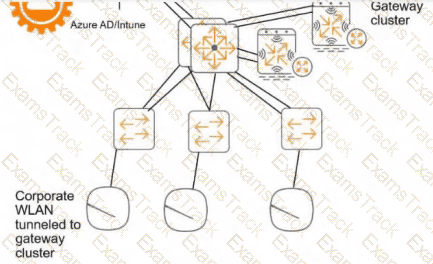
The customer requires a secure method for users to enroll new wireless clients in Intune. You recommend a new WLAN that gives users limited access for enrollment. Captive portal has been configured on this WLAN to direct clients to a web page containing device-enrollment instructions, and several hostnames must be added manually to the captive-portal allowlist.
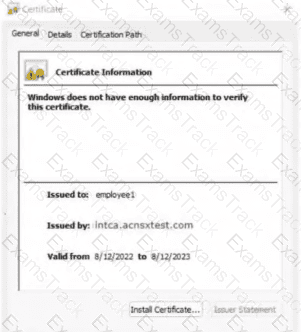
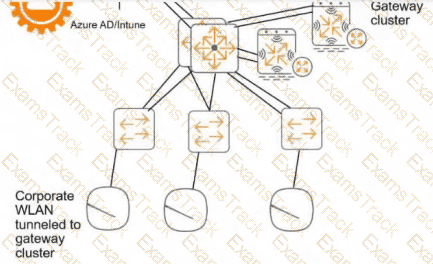
Which of the following is one such hostname?
|
PDF + Testing Engine
|
|---|
|
$42.5 |
|
Testing Engine
|
|---|
|
$32.5 |
|
PDF (Q&A)
|
|---|
|
$26.25 |
HP Free Exams |
|---|

|

Copyright © 2026 Examstrack. All Rights Reserved

TESTED 17 Nov 2026
