Spring Sale Limited Time 70% Discount Offer - Ends in 0d 00h 00m 00s - Coupon code: 70track

Free Cisco 300-215 Practice Exam with Questions & Answers | Set: 4

Questions 31

A network host is infected with malware by an attacker who uses the host to make calls for files and shuttle traffic to bots. This attack went undetected and resulted in a significant loss. The organization wants to ensure this does not happen in the future and needs a security solution that will generate alerts when command and control communication from an infected device is detected. Which network security solution should be recommended?

Options:
A.

Cisco Secure Firewall ASA

B.

Cisco Secure Firewall Threat Defense (Firepower)

C.

Cisco Secure Email Gateway (ESA)

D.

Cisco Secure Web Appliance (WSA)

Cisco 300-215 Premium Access
Questions 32

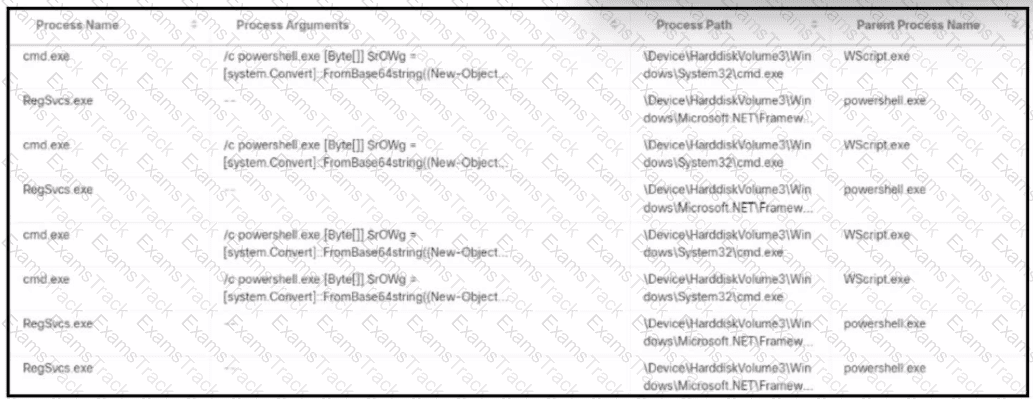
Refer to the exhibit.

300-215 Question 32

An alert came with a potentially suspicious activity from a machine in HR department. Which two IOCs should the security analyst flag? (Choose two.)

Options:
A.

powershell.exe used on HR machine

B.

cmd.exe executing from \Device\HarddiskVolume3\

C.

WScript.exe initiated by powershell.exe

D.

cmd.exe starting powershell.exe with Base64 conversion

E.

WScript.exe acting as a parent of cmd.exe

Questions 33

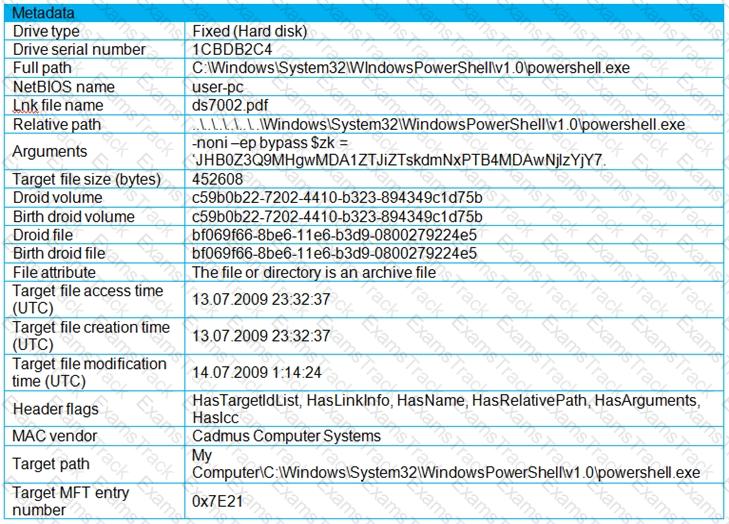
Refer to the exhibit.

300-215 Question 33

An engineer is analyzing a .LNK (shortcut) file recently received as an email attachment and blocked by email security as suspicious. What is the next step an engineer should take?

Options:
A.

Delete the suspicious email with the attachment as the file is a shortcut extension and does not represent any threat.

B.

Upload the file to a virus checking engine to compare with well-known viruses as the file is a virus disguised as a legitimate extension.

C.

Quarantine the file within the endpoint antivirus solution as the file is a ransomware which will encrypt the documents of a victim.

D.

Open the file in a sandbox environment for further behavioral analysis as the file contains a malicious script that runs on execution.

Questions 34

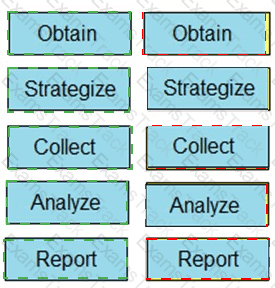
Drag and drop the steps from the left into the order to perform forensics analysis of infrastructure networks on the right.
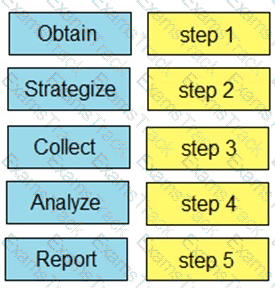
300-215 Question 34

Options:
Questions 35

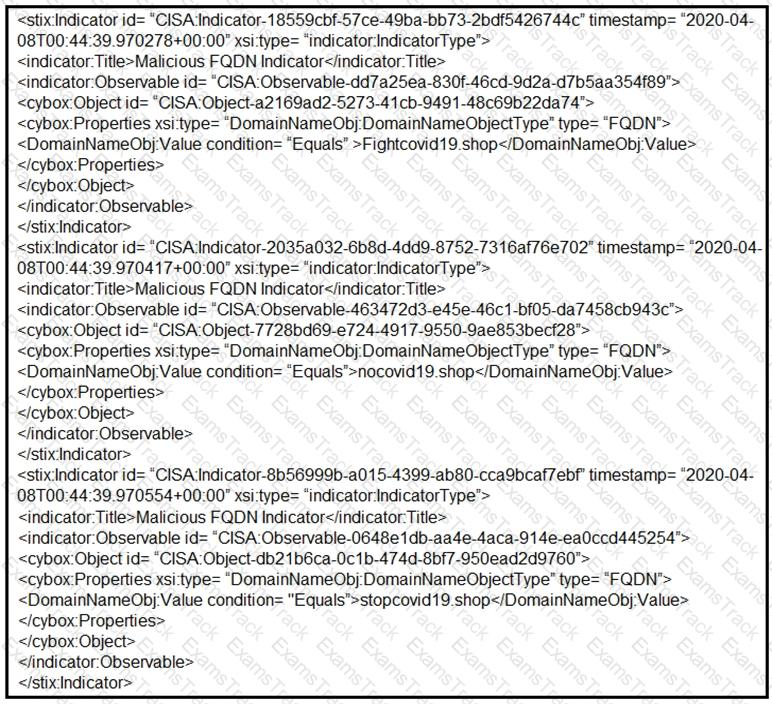
Refer to the exhibit.

300-215 Question 35

Which two actions should be taken based on the intelligence information? (Choose two.)

Options:
A.

Block network access to all .shop domains

B.

Add a SIEM rule to alert on connections to identified domains.

C.

Use the DNS server to block hole all .shop requests.

D.

Block network access to identified domains.

E.

Route traffic from identified domains to block hole.

Questions 36

An investigator notices that GRE packets are going undetected over the public network. What is occurring?

Options:
A.

encryption

B.

tunneling

C.

decryption

D.

steganography

Questions 37

A company had a recent data leak incident. A security engineer investigating the incident discovered that a malicious link was accessed by multiple employees. Further investigation revealed targeted phishing attack attempts on macOS systems, which led to backdoor installations and data compromise. Which two security solutions should a security engineer recommend to mitigate similar attacks in the future? (Choose two.)

Options:
A.

endpoint detection and response

B.

secure email gateway

C.

data loss prevention

D.

intrusion prevention system

E.

web application firewall

Questions 38

In a secure government communication network, an automated alert indicates the presence of anomalous DLL files injected into the system memory during a routine update of communication protocols. These DLL files are exhibiting beaconing behavior to a satellite IP known for signal interception risks. Concurrently, there is an uptick in encrypted traffic volumes that suggests possible data exfiltration. Which set of actions should the security engineer prioritize?
Options:
A.

Invoke a classified incident response scenario, notify national defense cyber operatives, and begin containment and eradication procedures on affected systems.

B.

Conduct memory forensics to analyze the suspicious DLL files, disrupt the beaconing sequence, and assess the encrypted traffic for breach indicators.

C.

Activate a secure emergency communication channel, isolate the segments of the communication network, and initiate a threat hunting operation for further anomalies.

D.

Sever connections to the satellite IP, execute a rollback of the recent protocol updates, and engage counter-intelligence cybersecurity measures.

Questions 39

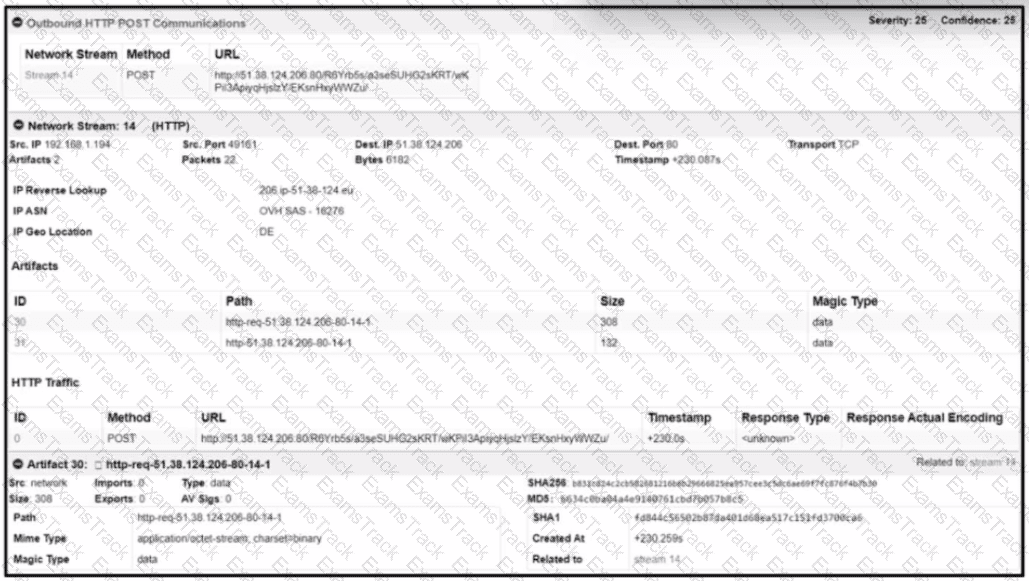
300-215 Question 39

Options:
A.

Destination IP 51.38.124.206 is identified as malicious

B.

MD5 D634c0ba04a4e9140761cbd7b057t>8c5 is identified as malicious

C.

Path http-req-51.38.124.206-80-14-1 is benign

D.

The stream must be analyzed further via the pcap file

Exam Code: 300-215
Certification Provider: Cisco
Exam Name: Conducting Forensic Analysis and Incident Response Using Cisco CyberOps Technologies (CBRFIR)
Last Update: Apr 7, 2026
Questions: 131