
Spring Sale Limited Time 70% Discount Offer - Ends in 0d 00h 00m 00s - Coupon code: 70track

Free NAHQ CPHQ Practice Exam with Questions & Answers | Set: 6

Questions 76

The quality professional is preparing for the annual review of a quality management program. The most important objective of the review is to evaluate the:

Options:
A.

Departmental mission statement.

B.

Scope of the program.

C.

Program's effectiveness.

D.

Performance targets for the upcoming year.

NAHQ CPHQ Premium Access
Questions 77

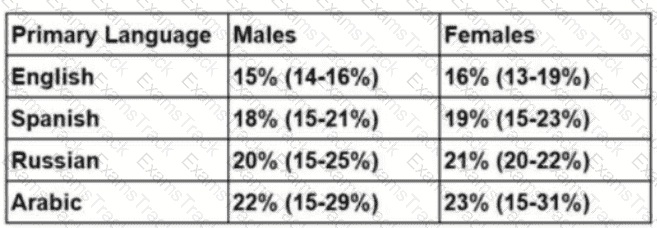
The data below shows 30-day readmission rates for heart failure patients by the primary language spoken and by gender with 95% confidence intervals in parentheses. Which group should be the priority target for reducing disparities in readmission rates?
CPHQ Question 77

Options:
A.

Arabic-speaking females

B.

Russian-speaking females

C.

All Arabic speakers

D.

All Russian speakers

Questions 78

Survey preparation is initiated by a quality professional for an organization's annual three-year accreditation. The executive committee and department managers are given an organizational schedule for training and accreditation activities. Which of the following is the best tool to use to manage this initiative?

Options:
A.

Gantt chart

B.

Multi-voting method

C.

Affinity diagram

D.

Ishikawa diagram

Questions 79

In developing a peer review program, the quality professional has identified an audit tool for chart review, determined the top five diagnoses, and formed a peer review committee. As part of the implementation process, the quality professional should next provide the committee:

Options:
A.

Training on how to conduct peer review and the elements of a peer review program

B.

An implementation timeline to develop the peer review program

C.

The results of the chart review of the top five diagnoses

D.

The case charts for peer review after determining which diagnoses to review

Questions 80

The quality Improvement (Ql) specialist recognizes that any documents related to medical peer review are

Options:
A.

reviewed during accreditation surveys.

B.

included In Ql research.

C.

used to determine privileges.

D.

classified as confidential documents.

Questions 81

Which of the following is an example of improving primary prevention strategies?

Options:
A.

Providing free flu vaccinations at the local community center

B.

Reducing time from stroke diagnosis to inpatient admission

C.

Assessing rehabilitation utilization rates for total hip replacement patients

D.

Setting parameters for non-compliant diabetic patients needing nutrition referrals

Questions 82

The quality improvement team at a hospital is prioritizing projects that could improve both quality of care and reimbursement. Which of the following projects should the team prioritize?

Options:
A.

Reducing wait times by increasing staffing in patient transportation

B.

Improving access to patient care supplies in the emergency department

C.

Increasing nursing retention on patient care units with high acuity

D.

Decreasing the current inpatient urinary catheter utilization rate

Questions 83

Which of the following is an example of an alternative payment model (APM)?

Options:
A.

Patient-centered medical home

B.

Sharedsavings program

C.

Hospital at home program

D.

Collaborative care model

Questions 84

To assist a primary care physician to improve their performance on a pay-for-performance program, the quality professional should begin with

Options:
A.

Obtaining a copy of the current measures for the physician

B.

Suggesting the physician take a course on measurement

C.

Writing a plan to improve processes in the office

D.

Researching benchmarking data for practices in the area

Questions 85

In preparation for a provider organization accreditation survey, the most effective method for identifying training needs for staff is

Options:
A.

conducting a gap analysis with an interdisciplinary team.

B.

benchmarking with other organizations.

C.

engaging a consultant to identify areas needing improvement.

D.

comparing competency requirements with other facilities.

Questions 86

In the development of a peer review program, the quality professional identified an audit tool for chart review, determined the top five diagnoses, and formed a peer review committee. As part of the implementation process, the quality professional should next provide the committee with:

Options:
A.

An implementation timeline to develop the peer review program

B.

Case charts for peer review after determining which diagnoses to review

C.

Results of the chart review of the top five diagnoses

D.

Training on how to conduct peer review and the elements of a peer review program

Questions 87

A healthcare quality professional should determine that this process is:

Options:
A.

Unstable

B.

Improved

C.

Changed

D.

Random

Questions 88

When analyzing nominal data, the quality professional uses a bar chart to display

Options:
A.

ratios.

B.

frequencies.

C.

distributions.

D.

correlations.

Questions 89

Which initiative should a quality professional promote in an organization seeking to optimize value-based reimbursement?

Options:
A.

Standardize joint replacement care pathways.

B.

Improve hand hygiene compliance.

C.

Reduce use of inpatient restraints.

D.

Implement computerized provider order entry (CPOE).

Questions 90

A healthcare quality professional receives the following data on causes of surgical delays:

Cause

Jan

Feb

Mar

Incomplete paperwork

7

3

6

Surgeon unavailable/late

10

4

7

Anesthesia late

3

3

3

Surgical instruments incomplete

6

1

7

Pre-op lab results missing

2

4

7

Blood not available

1

0

2

Patient not NPO

7

4

6

What steps should be taken to prioritize areas of concern?

Options:
A.

Prepare a Pareto chart and develop an action plan

B.

Develop a control chart and create an action plan

C.

Create an Ishikawa diagram to identify primary causes

D.

Draw a histogram and analyze causes