examstrack logo

You have an Azure Databricks workspace that contains a Delta table named Table 1. Table 1 has accumulated obsolete files.
You need to reduce storage costs. The solution must preserve 30 days of time travel history. Which two actions should you perform? Each correct answer presents part of the solution.
NOTE: Each correct selection is worth one point.
You have an Azure Databricks workspace that is enabled for Unity Catalog.
You need to profile a table to meet the following requirements:
The count of null values per column must be evaluated repeatedly as new records are added to the table.
Changes in the count of null values must be observable over the progression of the dataset.
Which type of profile should you create?
You have an Azure Databricks workspace that uses Databricks SQL.
You have a table named sales_goals_source that contains the following columns:
Salesperson
Item
2019
2020
2021
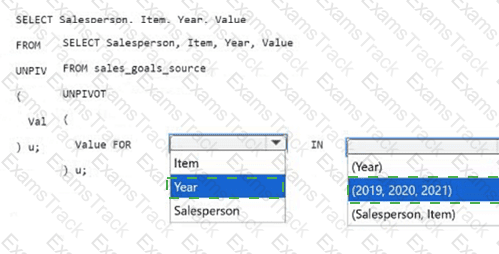
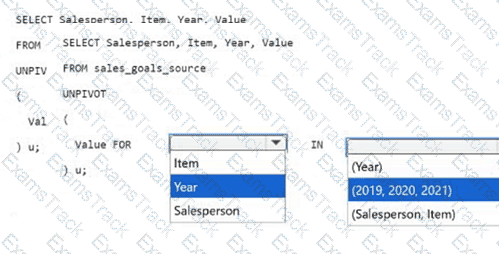
You need to transform the year columns into rows and return the columns Salesperson, Item, Year, and Value.
How should you complete the SQL statement? To answer, select the appropriate options in the answer area.
NOTE: Each correct selection is worth one point.
SELECT Salesperson, Item, Year, Value
FROM sales_goals_source
UNPIVOT
(
Value FOR [first dropdown] IN [second dropdown]
);
You need to develop the task logic for a new job in Lakeflow Jobs that processes telemetry data.
Each task must contain only the appropriate logic for its step in the pipeline. The solution must support the planned changes and meet the data ingestion and processing requirements.
What should you do?
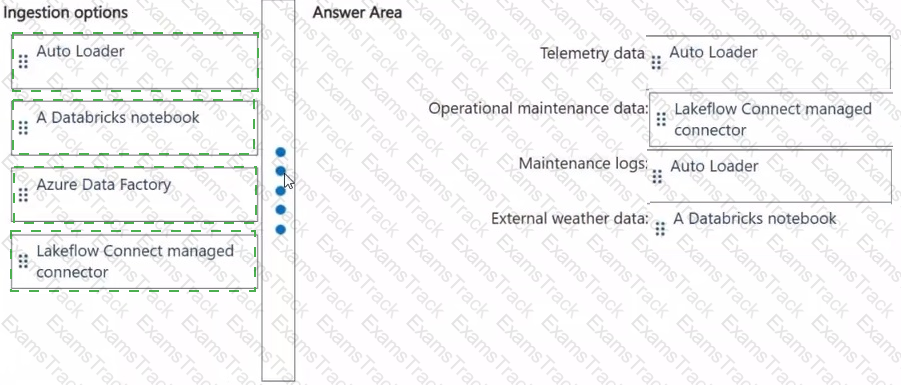
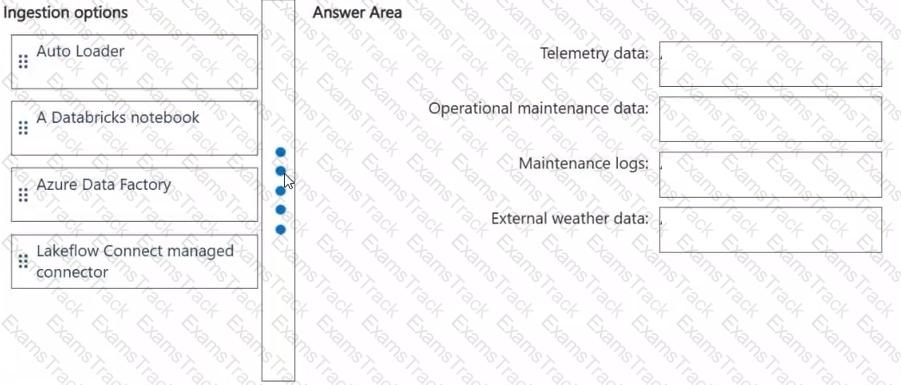
Which ingestion option should you recommend for each data source? To answer, drag the appropriate options to the correct data sources. Each option may be used once, more than once, or not at all. You may need to drag the split bar between panes or scroll to view content.
NOTE: Each correct selection is worth one point.
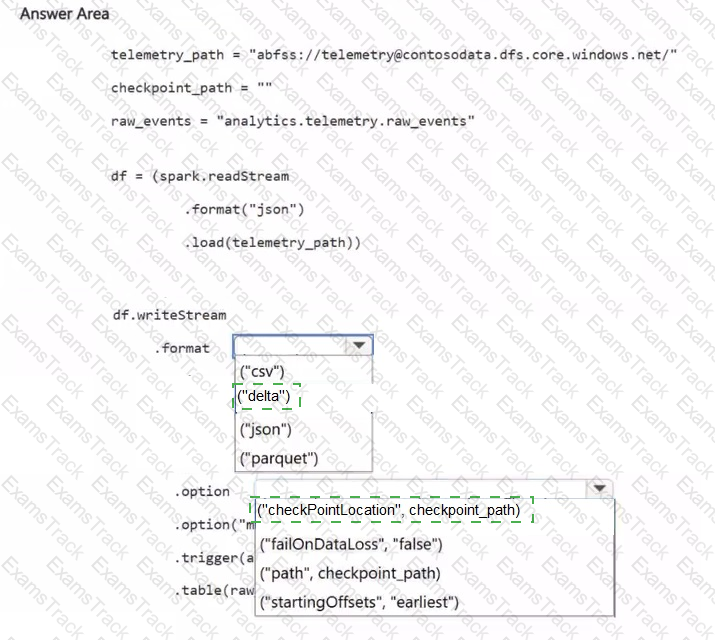
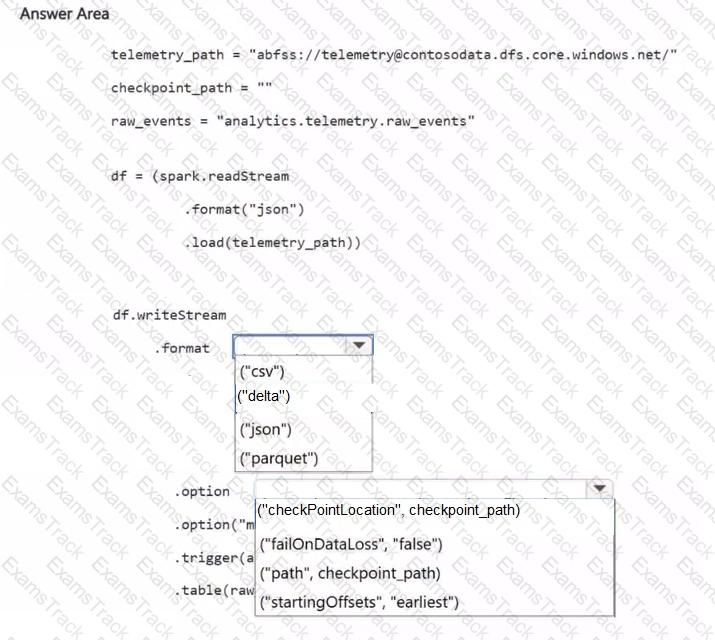
You need to complete the PySpark code for the Spark Structured Streaming pipelines. The solution must meet the data ingestion and processing requirements.
How should you complete the code segment? To answer, select the appropriate options in the answer area.
NOTE: Each correct selection is worth one point.
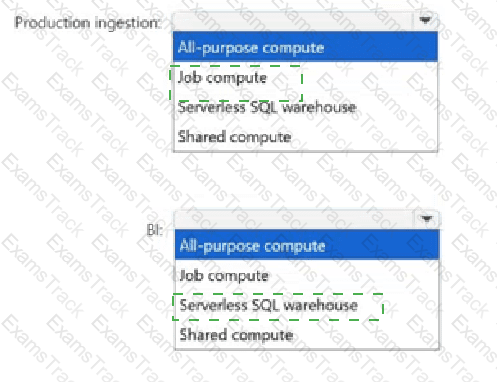
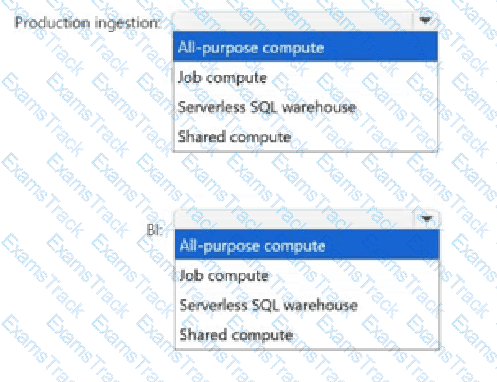
You need to recommend a compute type for the production ingestion workloads and BI workloads. The solution must meet the environment and compute requirements.
What should you recommend for each type of workload? To answer, select the appropriate options in the answer area.
NOTE: Each correct selection is worth one point.
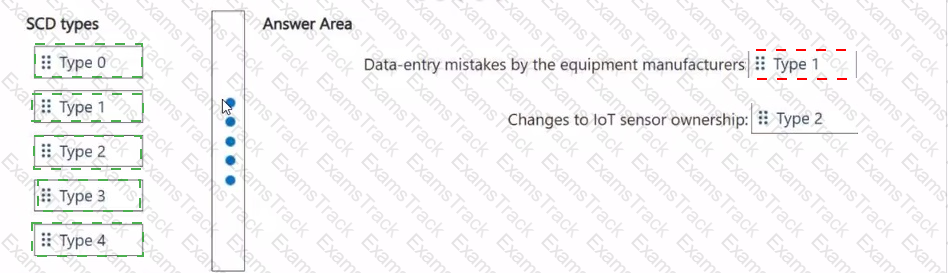
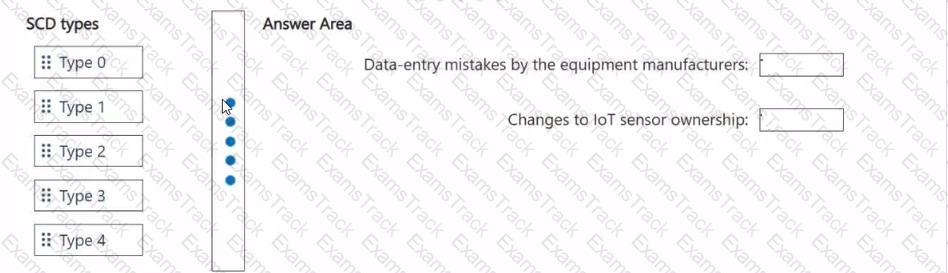
Which SCD type should you use to support the planned data modeling changes? To answer, drag the appropriate types to the correct issues. Each type may be used once, more than once, or not at all. You may need to drag the split bar between panes or scroll to view content.
NOTE: Each correct selection is worth one point.
You need to configure compute for the ingestion of telemetry data. The solution must meet the data ingestion and processing requirements.
What should you do?
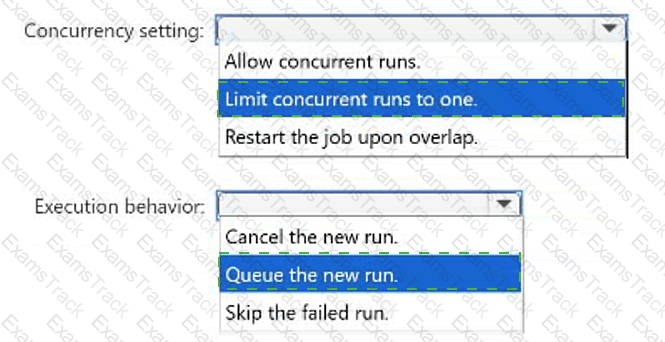
You have an Azure Databricks workspace that contains a job in Lakeflow Jobs named Job1.
Job1 runs every hour.
Occasionally, Job1 takes longer than one hour to complete.
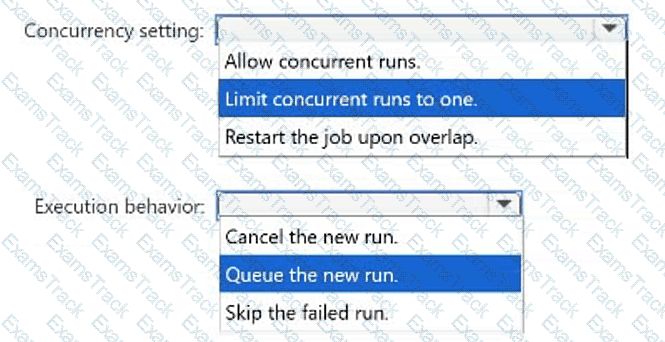
You need to configure the job scheduling behavior to meet the following requirements:
Overlapping runs must be prevented to avoid data corruption.
Scheduled runs must not be discarded when another run is already active.
What should you configure? To answer, select the appropriate options in the answer area.
NOTE: Each correct selection is worth one point.
|
PDF + Testing Engine
|
|---|
|
$43.75 |
|
Testing Engine
|
|---|
|
$33.75 |
|
PDF (Q&A)
|
|---|
|
$28.75 |
Microsoft Free Exams |
|---|

|

Copyright © 2026 Examstrack. All Rights Reserved

TESTED 19 Sep 2026