examstrack logo

A customer is upgrading its data-center structured cabling to SMF. At the same time, the customer wants to upgrade the spine switches in its spine-and-leaf topology. A key objective of this upgrade is to eventually support 400GbE leaf-to-spine links. However, for some time, many leaf switches will continue to support 100GbE uplinks.
What is a valid recommendation for the spine switches?
Refer to the exhibit.
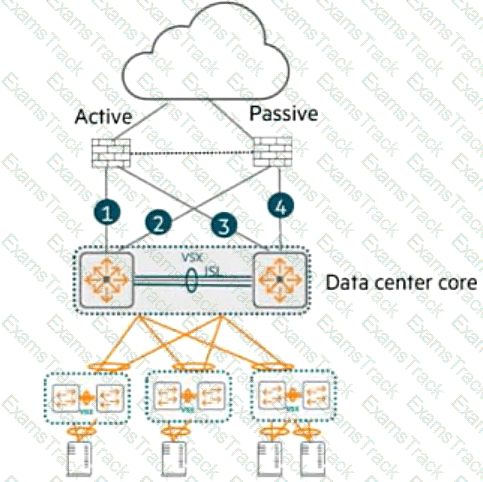
You are designing a data center network. The customer requests that you connect the data center core to their firewalls. The customer uses six VRFs for segmentation, and the firewalls are responsible for handling traffic in all of the VRFs.
What is the recommended design for the links between the data center core switches and the firewalls?
Waratah Hospital, located in Australia, plans to relocate many data-center services to a new facility. (The remaining legacy data center is outside this project’s scope.) Waratah Hospital has engaged an external consultant to help design the new data-center network.
Based on the data-center network-infrastructure requirements, the external consultant has produced a high-level design. The design document is summarized below.
Requirements and information:
Six racks in the data-center room (a single row).
Redundant top-of-rack leaf switches with back-to-front cooling in every rack, delivering 10/25 Gbps connectivity to servers, storage, and other devices.
Four 100 GbE uplinks per leaf switch.
The customer requested that all switch ports face the rear of the racks (the hot aisle).
OOB management for servers, storage, and network devices must be delivered through an external switch with back-to-front cooling. This switch must be included in the solution. One OOB switch provides connectivity for two racks.
Core equipment for the OOBM network is being reused.
Middle-of-row spine switches.
The data center must connect to the hospital building through links providing 400 Gbps.
Internet access is supplied through an existing firewall cluster with two firewalls, one in each data room. The second firewall operates in standby mode, and VRRP is used for firewall failover. The data-center network must connect to these firewalls with links totaling 100 Gbps.
The external link is a single-mode-fiber (OS2) dark-fiber direct link. The distance to the main hospital is 1.5 KM. The links will terminate on two core switches in the hospital.
The customer also requires:
99.999% uptime for this life-critical environment.
Planned and unplanned downtime must be minimized.
Software upgrades are permitted only once per year, with close to zero downtime.
All life-critical resources are accessed locally, and all resources are within the hospital campus.
Waratah Hospital requires a highly secure data-center environment. Encrypted wire-speed connectivity between the data room and the hospital is mandatory because the link between the buildings crosses a public road.
Waratah Hospital has a mix of virtualized (vSphere) servers, Nutanix storage, bare-metal servers, backup servers, and other devices.
Previously, the hospital experienced a security breach that caused data loss, network downtime, and identity theft.
Refer to the scenario. You are deciding between the CX 9300 and CX 8325 switches for the border leaf switches. Which hard customer requirement affects this decision?
You are upgrading a customer’s legacy three-tier architecture to an L3 spine-and-leaf topology. The CX switches in the topology will supply the overlay. The customer data center uses six VRFs. The customer has requested service leaf switches that connect to two clustered firewalls, which route and filter traffic between the VRFs.
How should the service leaf switches be connected to the firewalls?
Which details should you seek to identify during the initial data-center network design meetings with the customer? Choose two.
Waratah Hospital, located in Australia, plans to relocate many data-center services to a new facility. (The remaining legacy data center is not included in this project.) Waratah Hospital has engaged an external consultant to help design the new data-center network.
Based on the data-center network-infrastructure requirements, the external consultant has produced a high-level design. The design document is summarized below.
Requirements and information:
Six racks in the data-center room (a single row).
Redundant top-of-rack leaf switches with back-to-front cooling in every rack, delivering 10/25-Gbps connectivity to servers, storage, and other devices.
Four 100-GbE uplinks per leaf switch.
The customer requested that all switch ports face the rear of the rack racks (hot aisle).
OOB management for servers, storage, and network devices must be provided through an external switch with back-to-front cooling. This switch must be included in the solution. One OOB switch provides connectivity for two racks.
Core equipment for the OOBM network is being reused.
Middle-of-row spine switches.
The data center must connect to the hospital building through links providing 400 Gbps.
Internet access is supplied through an existing firewall cluster containing two firewalls, with one firewall in each data room. The second firewall operates in standby mode, and VRRP is used for firewall failover. The data-center network must connect to these firewalls through links totaling 100 Gbps.
The external link is a dark-fiber direct link using single-mode fiber (OS2). The distance to the main hospital is 1.5 KM. The links will terminate on two core switches in the hospital.
The customer additionally requires:
99.999% uptime for this life-critical environment.
Planned and unplanned downtime must be minimized.
Software upgrades are permitted only once per year, with close to zero downtime.
All life-critical resources are accessed locally, and all resources reside within the hospital campus.
Waratah Hospital requires a highly secure data-center environment. Encrypted wire-speed connectivity between the data room and hospital is mandatory because the inter-building link crosses a public road.
Waratah Hospital has a mixture of virtualized (vSphere) servers, Nutanix storage, bare-metal servers, backup servers, and other devices.
Previously, the hospital experienced a security breach that caused data loss, network downtime, and identity theft.
Refer to the scenario. You have learned that the customer must extend two VRFs between the new data-center facility and the hospital. To meet the scenario requirements and general best practices, what should you recommend to connect border leaf switches to the hospital core?
Waratah Hospital, located in Australia, plans to relocate many data-center services to a new facility. The remaining legacy data center is outside this project’s scope. Waratah Hospital engaged an external consultant to help design the new data center network.
Based on the data center network-infrastructure requirements, the external consultant created a high-level design. The design document is summarized below.
Requirements and information:
Six racks in the data center room, arranged in a single row.
Redundant top-of-rack leaf switches with back-to-front cooling in every rack, delivering 10/25 Gbps connectivity for servers, storage, and other devices.
Four 100 GbE uplinks per leaf switch.
The customer requested that all switch ports face the rear of the racks (the hot aisle).
OOB management for servers, storage, and network devices must be provided through an external switch with back-to-front cooling. This switch must be included in the solution. One OOB switch provides connectivity for two racks.
Core equipment for the OOBM network is being reused.
Middle-of-row spine switches.
The data center must connect to the hospital building using links that provide 400 Gbps.
Internet access is supplied through an existing firewall cluster with two firewalls, with one firewall in each data room. The second firewall operates in standby mode, and VRRP is used on the firewalls for failover. The data center network must connect to these firewalls with links totaling 100 Gbps.
The external link is a direct dark-fiber link based on single-mode fiber (OS2). The distance to the main hospital is 1.5 KM. The links will terminate on two core switches in the hospital.
The customer also requires:
99.999% uptime for this life-critical environment.
Planned and unplanned downtime must be minimized.
Software upgrades are permitted only once per year, with close to zero downtime.
All life-critical resources are accessed locally, and all resources are located within the hospital campus.
Waratah Hospital requires a highly secure data center environment. Encrypted wire-speed connectivity between the data room and the hospital is mandatory because the link between the buildings crosses a public road.
Waratah Hospital has a mixture of virtualized (vSphere) servers, Nutanix storage, bare-metal servers, backup servers, and other devices.
The hospital previously experienced a security breach that caused data loss, network downtime, and identity theft.
Which valid assumptions can be made for this scenario when preparing the network design documentation? Choose two.
You are designing an L3 spine-and-leaf architecture for a customer using CX 10000 Series switches as leaf switches. The customer has added a requirement that the leaf switches also support the servers’ iSCSI adapters. You have verified that the design also meets the customer’s requirements for lossless iSCSI. The customer asks for guidance on ensuring that the east-west firewall allows the iSCSI traffic.
What should you explain?
You are recommending HPE Aruba Networking Central to a customer. Which customer requirement can be met only with an AAS license rather than an AAE license?
Identify the documentation resources that provide validated information to help the architect design the solution. Choose two.
|
PDF + Testing Engine
|
|---|
|
$42.5 |
|
Testing Engine
|
|---|
|
$32.5 |
|
PDF (Q&A)
|
|---|
|
$26.25 |
HP Free Exams |
|---|

|

Copyright © 2026 Examstrack. All Rights Reserved

TESTED 22 Nov 2026
